Delco Moves Forward on Better Waste Management

Everyone should be excited by the goals leading off the recently published request for proposals and qualifications from consultants to the next revision of the municipal waste management plan for Delaware County.

Delaware County is soliciting proposals to lead revision of the county municipal waste management plan.

Here are some of the specifics about the program to revise the plan and what the plan should contain:

  • It’s a 10-year plan, required by the state.
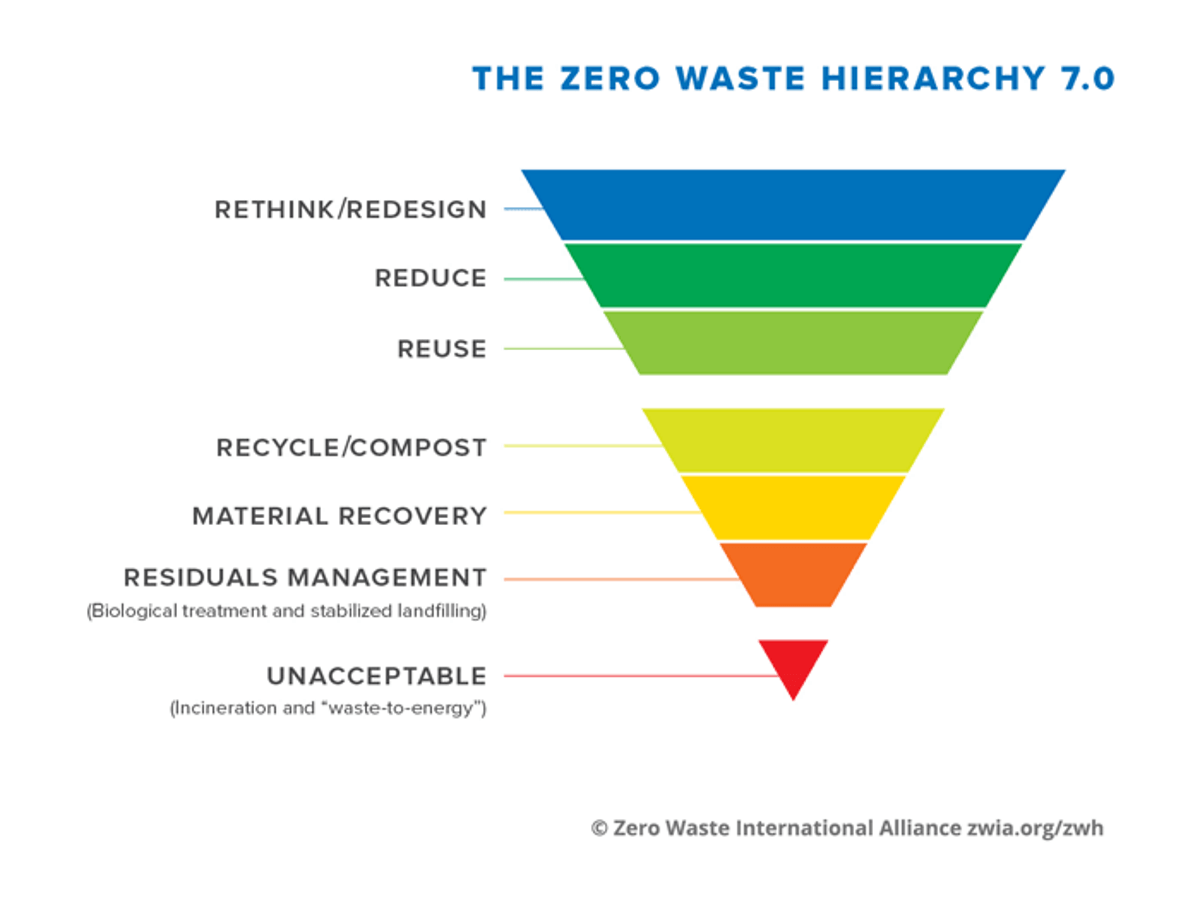
  • It is intended to be a guide to the county’s transition to sustainable methods of materials management using Zero Waste practices and following the Zero Waste Hierarchy.
  • It will review the effectiveness of county’s recycling programs, and examine market development for recyclables and the feasibility of collecting organics and compostable materials for inclusion in our recycling program.
  • It will focus on resource conservation and protecting the public health, safety, and welfare for both the short and long-term, especially in relation to transportation, processing, treatment, storage, and disposal of municipal waste.
  • It will evaluate how Zero Waste solutions can help meet other county goals for cost savings and other efficiencies across programs.
  • And finally, development of the plan is intended to engage with stakeholders in the county.
Photo by Ivan Samkov on Pexels.com

There is no precise timeline, and we don’t know who the experts will be to conduct this plan investigation. There is considerable detail provided in the published document that seeks evaluation of a number of different elements to our future plan, but clearly the county has made a statement about where they see waste management going in the future.

It certainly appears that a Zero Waste philosophy is building strength in Delaware County. Let’s all get ready to be involved!

Do you have a perspective that should be part of the next municipal waste management plan? If so, please comment here or through our many media channels. Spread the word!

Don’t Demolish, Deconstruct: Rebuilding in a Zero Waste World

Could deconstruction instead of demolition help create a sustainable construction economy?

Keeping stuff out of landfills and incinerators is the focus of the Zero Waste Hierarchy, and this recent NY Times article presents the current state of progress on building deconstruction.

On the challenge side:

  • There needs to be increased demand for salvaged materials.
  • Salvaged materials aren’t always economical to refurbish today.
  • It takes longer to deconstruct than to demolish.
  • Deconstruction might expose hazardous materials like lead paint.
  • Major, salvaged structural elements are hard to make certifiable again for new construction.

On the opportunity side:

  • Municipalities and, as noted, even Google are looking to use more recycled materials as a way to reduce carbon footprint.
    • If we demand better attention from contractors during our own construction and renovation projects, we’ll start to move the needle.
  • Tools and training can be driven to speed the process and safety of deconstruction.
  • We can design new tools and technologies (through programs like this and this) to make salvaged materials more recoverable and more useful
    • Imagine just one piece of old molding from your home with years of paint, nails, nail holes, scrapes, cracks, etc., and you get the challenge — but each of these flaws has a solution that can be automated.
    • Now extend that to a structural beam that you’d really like to keep useful as a certifiable structural component. There’s technology to assess that old beam for its strength and durability, as well, if we demand it.

Who’s doing it right?

Well, Portland, Oregon, passed an ordinance “requiring certain homes to be deconstructed, rather than demolished”. It applies to structures built in 1940 or earlier or those structures designated as historic.

Other places like Milwaukee; Palo Alto, CA; and San Jose, CA, Pittsburgh, San Antonio; Foster City, CA; and Orange County, NC are also pursuing deconstruction initiatives.”

Portland is no small town and if they can do it, perhaps Delaware County can do it, too. Or maybe just Upper Darby or Swarthmore or Wallingford or Lansdowne or Nether Providence — all of which just passed the Zero Waste Resolution.

Delco has a LOT of structures that would meet these criteria (if implemented), so the market is pretty solid for a long time.

On another front, “architects and academics are exploring ways to design buildings that can be easily disassembled and reused.” It’s all part of learning to build and sustain a circular economy where waste materials from one industry are used as raw material from another.

And then there’s Habitat for Humanity Restores (there used to be one in Folsom) that directly reuse non-structural elements like kitchen cabinets. If we adjust our expectations, and accept that a few scratches are part of life anyway, we can incorporate reused components to bring a decorative flare to any home at substantially less cost and much lower carbon impact.

What can we do about it?

Well, there are a number of things we can do locally and across our county to educate and encourage action and change.

All of them require that we get creative, think innovatively and collaboratively about the integrated nature of this challenge.

We can join (or start) our municipality’s environmental advisory committee or the local planning or historic commission to encourage consideration of related ordinances and initiatives.

We can write to the Delaware County Sustainability Commission to ask for a discussion of this topic. They can, in turn, make a recommendation for similar resolutions that drive this and other Zero Waste initiatives.

We can join and support local action groups who are fighting to reduce waste or our environmental impact. Here’s one. Here’s another. And another. And another.

And one of our county’s state senators, Senator Tim Kearney, is an architect with direct experience and knowledge of the impact and possibilities of these programs.

And at a national level, the Urban Sustainability Directors Network fosters innovation and networking on building deconstruction that guides local and regional governments these initiatives. Their site even list organizations and companies the support or perform deconstruction — companies like Second Chance that started as simple recyclers but have grown significantly through their deconstruction programs.

And finally, the Institute for Local Self-Reliance, through their Waste to Wealth program, promotes the local economic and workforce development benefits of deconstruction and repurposing programs.

Look around, and you’ll see that more environmental building construction is clearly possible.

And change is possible when we work together.

Do you see other opportunities to bring new policies to Delco and our municipalities that drive waste reduction? Join our Blog Force today.


So Much Recycling, So Little Time

[Photo is of the Chester Covanta receiving floor taken by the Delco Times. It still looks like that.]

Short story, I hope: I visited the Covanta incinerator in Chester recently and got the full tour of their facility, including getting to stand over the large receiving area where ALMOST ALL of Delco’s trash goes to be burned. I wish I had a photo, but it is quite a sight (and smell). [You might have seen a Covanta exec saying it ‘smells like money’. Hmmm.]

As someone with more than a passing interest and some knowledge about the options for recycling, I was struck by how much material could have been recycled. So much metal, Mattresses. Cardboard. Wood and other construction materials. Loads of clearly recyclable plastics.

With just a little education and effort, there could be a substantial reduction in what gets incinerated and tossed up into the air over Chester and feeding climate change with rapid green house gas emissions.

It’s clear that as Delco looks to review and revise its Solid Waste Management Plan for the next 10 years, we’re all going to have to learn a lot more about how to recycle, what to recycle, and how to reduce what we’re tossing into the garbage.

Landfill space isn’t getting cheaper. Incineration, if it stays (and groups are working hard so that it won’t) will get more expensive if better pollution controls are imposed (Covanta is 30+ years behind on their controls, just FYI.).

Zero Waste Delco is not just about a lifestyle change and changing buying habits. We need to make this a project for our entire community, and when we do I’m confident that Delco can be a model county in the US. We have so much to gain from making this work and the sooner we get started the better.

Would you like to share your thoughts on Zero Waste? Reach out and let’s talk.

Cotton Grocery Bags – NOT

This is one of the easiest zero waste swaps. Keep them in your car, and just get in the habit of using them.

BUT…

Be mindful that cotton bags are NOT environmental. Look for hemp or some other low-impact textile material, even if it’s recycled plastic.

And as a reminder…

Avoid Grocery Store Plastic Produce Bags, Too!

It’s not always possible, but one can usually get most items home and into their spots without needing a separate bag. Why did we ever need them?

What are YOUR grocery tips? Are there any grocery stores that are helping to reduce waste, especially plastic waste?

Recycled Bathroom and Facial Tissue – Who Knew!

Who knew recycled bathroom tissue (toilet paper) and bamboo facial tissues are a thing?!

This example is from whogivesacrap.com, but there are others. (No endorsement here.)

They can be competitively priced, with bulk, plastic-free shipping and packaging. Very good quality, especially for the tush (we know ‘dis).

We’re not marketing, but noting this because there are a surprising number of products that are arising from the movement for zero waste.

Do you have other surprises you want to share?

Contacting Manufacturers on Zero Waste

Eliminating plastics and other waste sources from our products is an easy request from consumers. The more we let companies know that they need to follow the waste hierarchy the more likely we’ll make progress.

Don’t be silent. Go where the source is.

If you see something, say something, and this is a pretty easy way to make a difference.

Of course, we can all vote with our wallets, too. Buying products that are clearly making an effort to reduce waste is important as a first step. (And let’s make sure these efforts are genuine, not “green-washing“.)

Do you know a Delco business that’s making a difference? Shout them out here or our various social media pages.

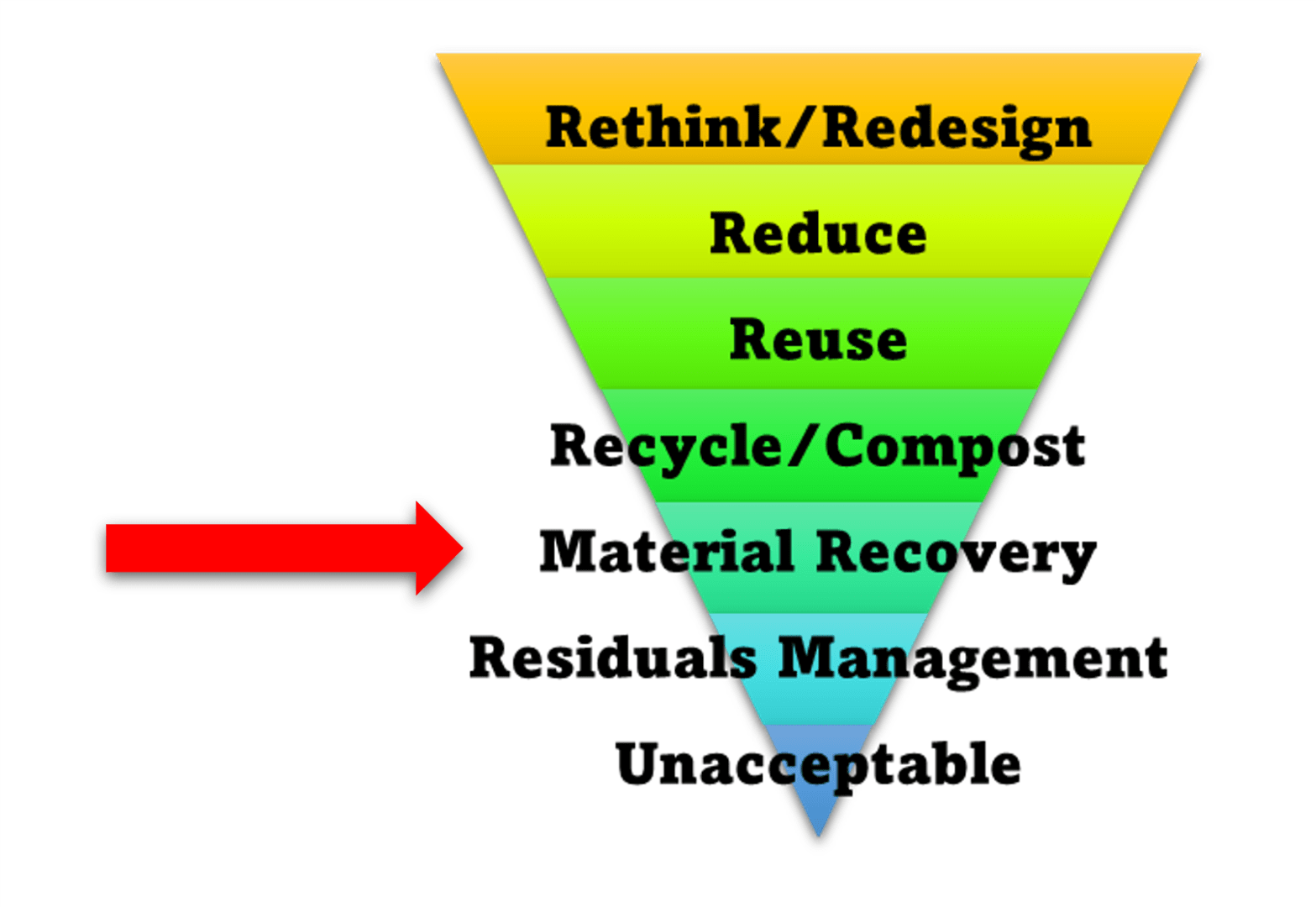
The 7-Step Zero Waste Hierarchy

Based on research and recommendations, we follow the 7-element hierarch published by the Zero Waste International Alliance.

Their model provides the greatest number of avenues for waste reduction.

Beyond Just Drinking Water: Let’s Stop Buying Water in Plastic Bottles

Are you trying to reduce the amount of plastic you use? Are you frustrated by all the plastic bottles around your house?

It’s not just about drinking water, which is an obvious opportunity, but we buy lots of products, mostly cleaning and personal products, that are just chemicals diluted with water. Eliminate the water, shift the active ingredients to a tablet, condensed fluid, or other method, and you save LOTS of energy AND plastic in delivering products to consumers. Start small, and keep going.

This isn’t a new concept, but with the rising focus on plastics and energy reduction, the idea is growing in importance.

“…asking consumers to dilute the product at home means 97 percent less water being transported, 87 percent fewer trucks on the road…”

Unilever

If this isn’t possible, then look for refillable products to at least avoid the constant use/disposal of plastic bottles.

If THIS isn’t possible, notify the manufacturer that they need to REDESIGN their products.

Do you know a product that you’ve swapped in for a plastic bottle with lots of water? Please comment.

It’s Summer! How to Throw a Zero Waste Party or Event

Jim's avatarJim McLaughlin's Blog

I’ll admit up front that I’m a complete newbie at this. I was made sensitive to the issue of reducing waste when a local citizens group in Chester, Pennsylvania, who has been working for OVER 30 YEARS to stop, Covanta, the largest US incinerator from continuing to spew noxious gasses into the air and lungs of area residents as well as dropping lead and other nasty pollutants on top of the community.

You can read all about that at this site, but with summer being here and, thankfully after a horrible pandemic year, I wanted to take a moment to research ways we can all reduce our waste (so plastics — most of which are NOT recyclable — and other otherwise recyclable/compostable materials can be kept out of the incinerator and out of the lungs of children in Chester.

OK, I will stop beating you up, and simply point…

View original post 137 more words

Co-Bloggers Wanted

Would you like to write posts about Zero Waste, what it means to you here in Delco, or how we can engage other county residents in a constructive discussion on waste reduction and waste management?

Contact us! We’d love to talk!